
Ducks: The Underrated Bird That's Been With Us All Along
From ancient rice paddies to urban park ponds, ducks have shared space with humans for millennia — and they're far more interesting than a casual glance suggests.

Ducks: The Underrated Bird That's Been With Us All Along
The duck rarely gets the cultural spotlight that chickens or eagles enjoy. It's treated as a background character — pleasant, familiar, easy to ignore. That's a mistake. Ducks are remarkable animals with a fascinating biology, a long history alongside humans, and a culinary legacy that rivals almost any other bird.
A Bird Built for Two Worlds
Ducks are waterfowl, meaning their bodies are engineered for life both on water and on land. A few of the adaptations that make this possible:
- Waterproof feathers coated in oil secreted from the uropygial gland near the tail, which ducks spread across their plumage during preening
- Webbed feet that function as efficient paddles without slowing the bird down on land
- A countercurrent heat exchange system in their legs that keeps their feet from freezing in cold water by warming incoming blood against outgoing blood
- Specialized bills lined with lamellae — comb-like filters — that strain food from water with surprising precision
Domestication and History
The domestic duck (Anas platyrhynchos domesticus) descends from the mallard and was domesticated in China roughly 2,000 to 3,000 years ago, significantly later than the chicken. They were kept primarily for eggs initially, and duck eggs remain a staple in much of East and Southeast Asia today.
In ancient China, ducks were commonly raised alongside rice paddies in a system that was elegant in its efficiency:
- Ducks ate insects and weeds that would otherwise damage crops
- Their waste fertilized the paddy
- Farmers got eggs and eventually meat with minimal additional input
This integrated rice-duck farming system is still practiced today and is considered an early example of sustainable agriculture.

Duck Behavior and Intelligence
Ducks are social, curious, and — particularly in the case of domestic breeds — surprisingly personable. A few things worth knowing:
Imprinting
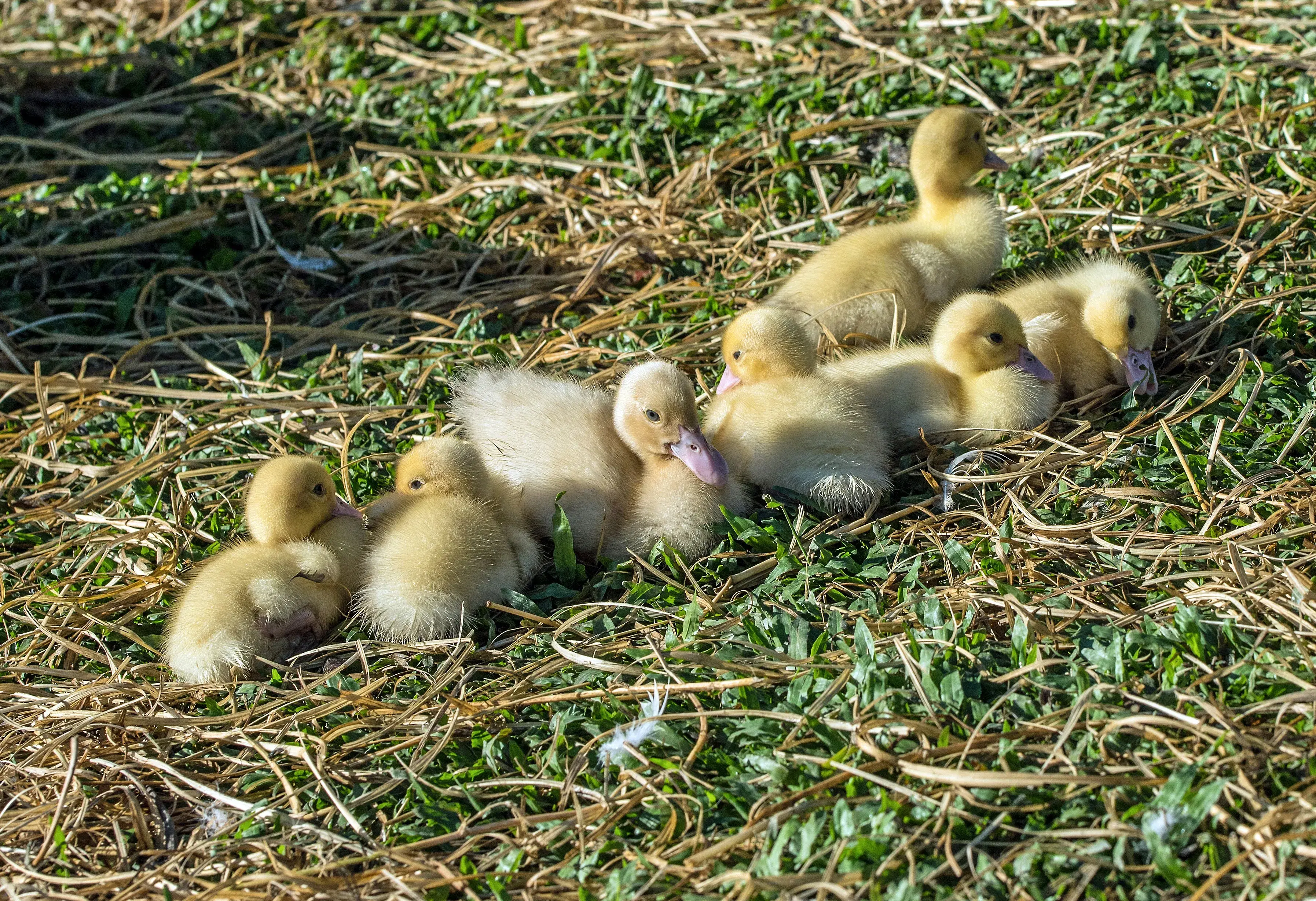
Ducklings famously imprint on the first moving thing they see after hatching, which is normally their mother. This instinct is so strong that ducklings raised by humans will follow their keeper with the same devotion they would show a hen. Konrad Lorenz's classic studies of imprinting used ducks and geese as his primary subjects. Read more about imprinting behavior here.
Navigation
Ducks are migratory, and wild species navigate using a combination of the Earth's magnetic field, star patterns, and landmarks. Young ducks learn migration routes from older birds on their first journey south — a transfer of knowledge that researchers consider a basic form of culture.
Communication
Like chickens, ducks communicate through a varied repertoire of sounds. Contrary to popular belief, not all ducks quack — the familiar quack is specific to female mallards. Males and other species produce raspy calls, whistles, and soft grunts depending on context.
Duck in the Kitchen
Duck occupies a unique space in the culinary world: it's a bird, but it eats more like red meat. The high fat content of duck breast — particularly the thick layer beneath the skin — means it rewards techniques more typically associated with beef or pork.
Classic Preparations
- Peking duck — arguably China's most iconic dish — lacquers the bird in a maltose glaze and roasts it until the skin is shatteringly crisp, then serves it with thin pancakes, scallions, and hoisin sauce. Its history stretches back to imperial China.
- Confit de canard, the French preparation of duck legs slow-cooked and preserved in their own fat, is one of the great examples of peasant food elevated to culinary art
- In Vietnam, vịt quay — roasted duck seasoned with lemongrass and five spice — is a common street food staple
- Magret de canard, seared duck breast from birds raised for foie gras, is treated like a steak — cooked medium-rare and rested before slicing
The Egg Question
Duck eggs are larger, richer, and higher in fat than chicken eggs, with a more pronounced flavor. They're prized in baking for producing fluffier cakes and chewier cookies due to their higher albumin content. In the Philippines, balut — a fertilized duck egg eaten as street food — is considered both a delicacy and a cultural institution, despite its reputation among the uninitiated.
Why Ducks Deserve More Credit
The duck has fed civilizations, inspired scientific breakthroughs in animal behavior, and produced some of the most celebrated dishes in the world. It thrives in environments from Arctic tundra to tropical wetlands. It has shared space with humans, quietly and productively, for thousands of years.
It's time to give the duck its due.